Origin data for EUDR due diligence on Brazilian coffee
The proof missing from your due diligence
From 30 December 2026, placing Brazilian coffee on the EU market means proving three things, lot by lot: traceability, deforestation‑free origin, and compliance with the laws of the producing country. The third one cannot be solved by satellite.

Free case study · PDF, 10 slides
Traceability and deforestation already have suppliers on the market. The third proof does not.
Legal compliance in Brazil is a public‑records problem, held inside Brazilian institutions. From Europe there is no way to query, interpret and document those records remotely, and that is exactly what your due diligence file needs.
Labour and legal
compliance.
02
Why this is hard in Brazil
Brazilian law treats work analogous to slavery as more than forced labour: debt bondage, exhausting hours and degrading housing, water or hygiene also count. Coffee harvests rely on seasonal migrant workers, often hired through intermediaries, across thousands of small farms. A supplier's signed declaration does not cover that.
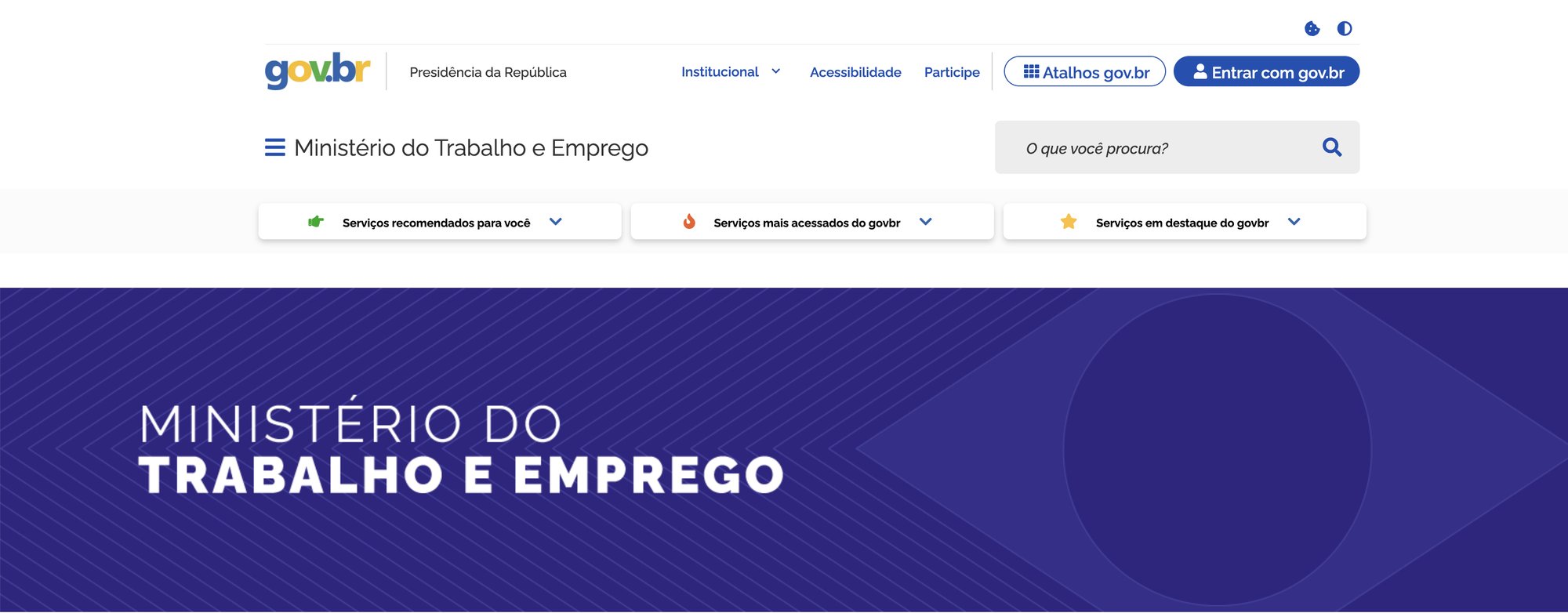
The Cadastro de Empregadores (the “lista suja”) is the Ministry of Labour's public list of employers fined for these conditions. A name only enters after years of administrative process. By the time a supplier appears there, the risk has long been in your chain.
What we do
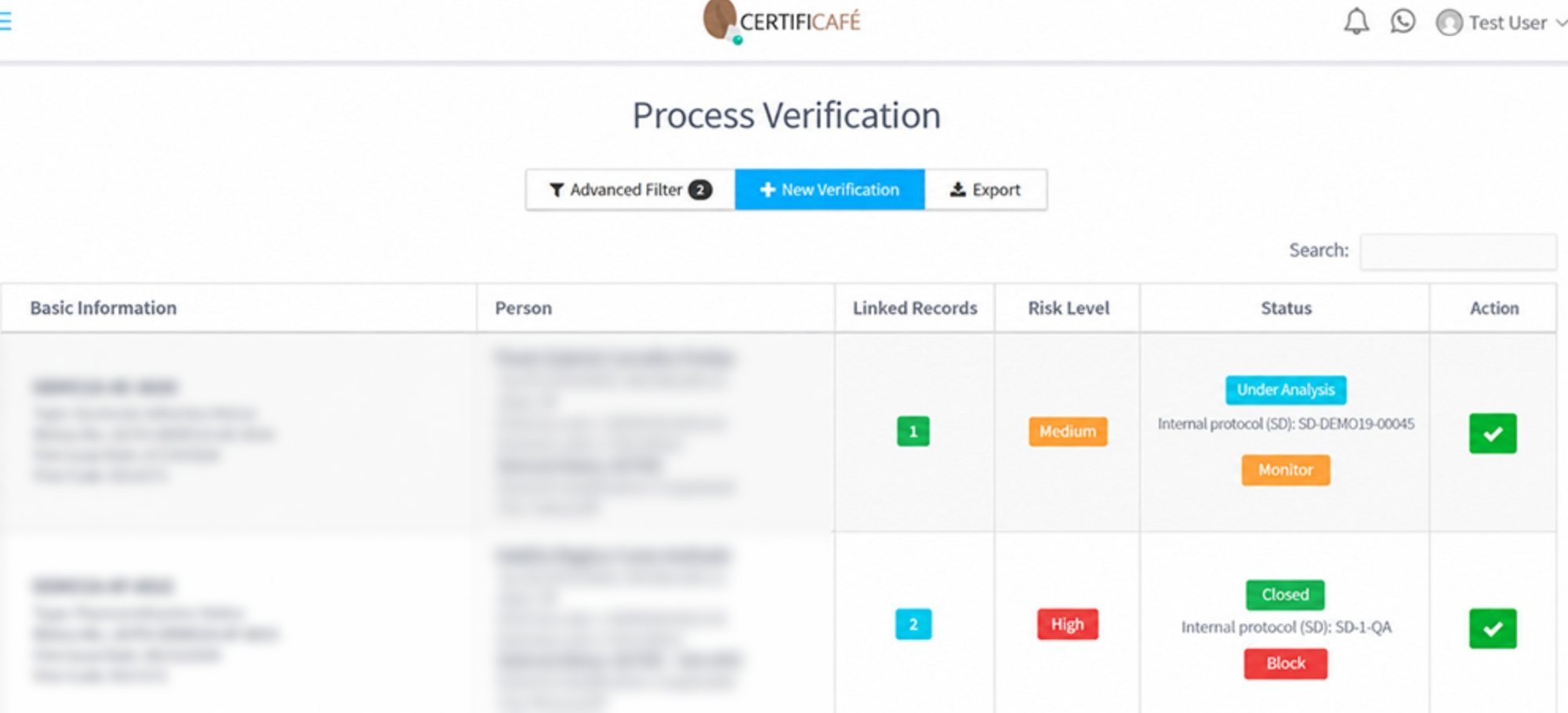
Flagged before it reaches you.
We monitor labour infractions across your supplier base from the moment of inspection, and alert you before the name reaches the Cadastro. You get time to require correction, document the remediation or remove the supplier from the lot, with every step filed as evidence.
Sustainability project management
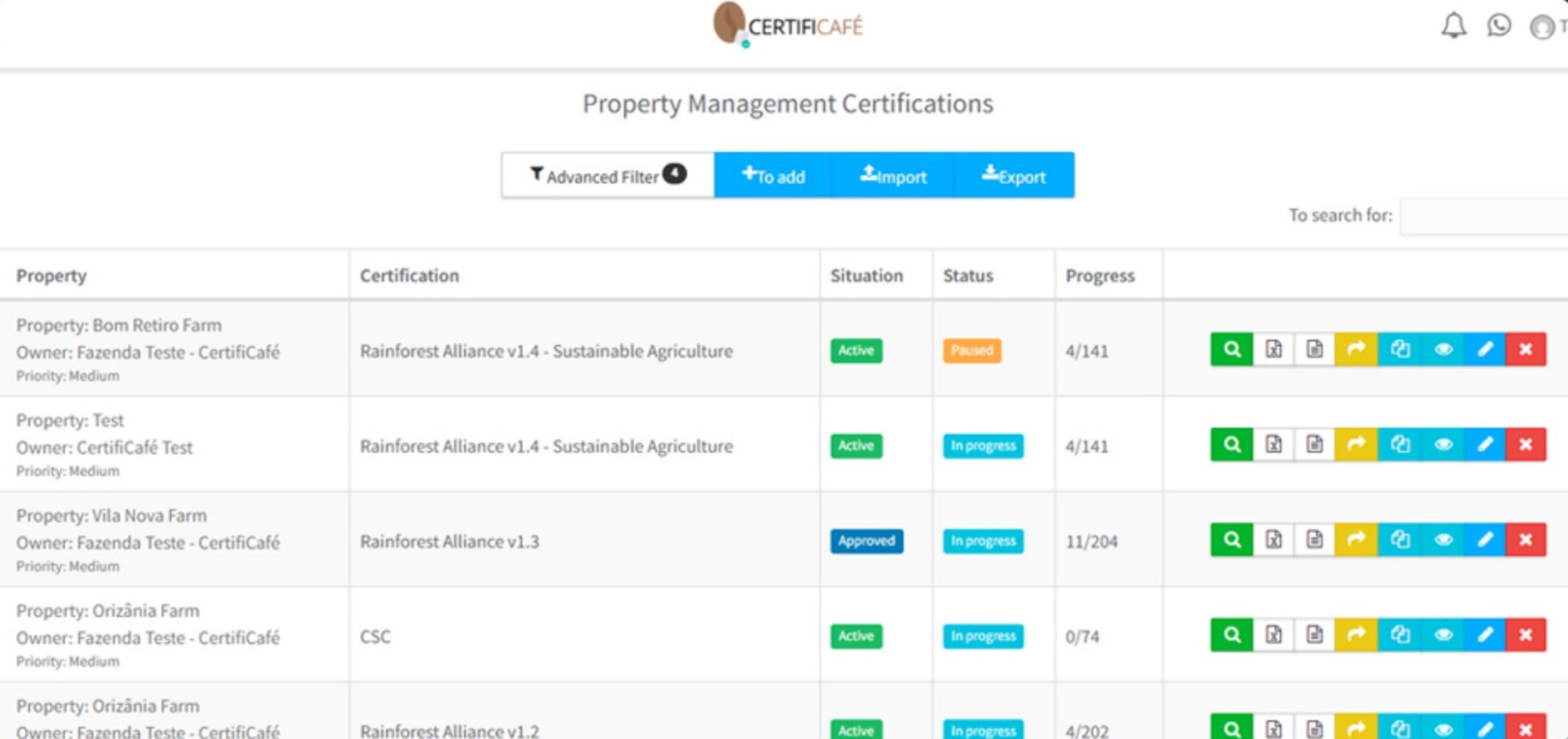
Any standard, turned into tasks.
A digital checklist with guidance, a document template and a proof file for every requirement: Rainforest Alliance, Organic or your own protocol. Includes lot traceability from origin to sale, and farm‑level people records: training, PPE, occupational health and formal employment.
The result is evidence you file.
Not a declaration you have to believe.
Already working at scale.







We are the legal and certification evidence layer, and we integrate with your geospatial data provider.
Case study · 10 slides
How to secure Brazilian coffee purchases with labour compliance
A real, anonymised case: how a Brazilian supplier base was documented for the EUDR labour requirement. What was checked, how risk was caught before it became a public infraction, what evidence was filed, and how the European buyer presents it at audit.
Let's get a coffee and talk about it?
If you import Brazilian coffee directly, or serve clients who do, twenty minutes is enough to see a real supplier base with its legal compliance record attached.